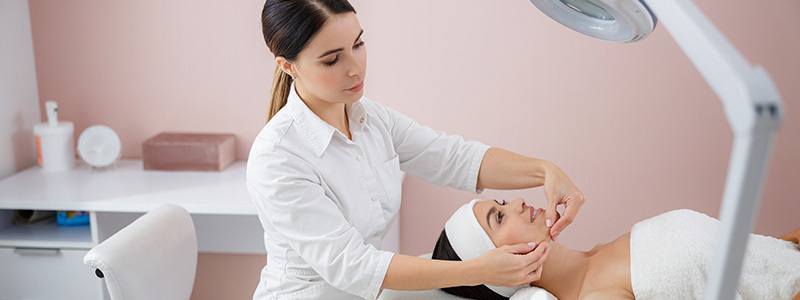

An esthetician, also known as a skin care specialist, provides cosmetic skincare services such as facials, skin cleansing, facial massage, makeup application, and certain hair removal services. Daily responsibilities may include consulting with clients about their skincare needs, performing treatments such as facials and skin cleansing, recommending appropriate skincare products, and maintaining clean, sanitary work areas and equipment. Other services may include facial massage, makeup application, and certain hair removal methods.
In New Jersey, skin care specialists are limited to cosmetic services that stay within the state’s permitted scope of practice. Treatments cannot penetrate below the stratum corneum in a way that affects living epidermal cells. A Skin Care Specialist license does not authorize medical procedures, diagnosing skin conditions, or treating diseases. New Jersey also does not issue a separate state license called a Medical Esthetician.
If you’re interested in a career in skincare, Shore Beauty School in Egg Harbor Township offers a 600-hour Skin Care Specialty program that combines classroom instruction with practical training.
1. What Services Does an Esthetician Perform?
Estheticians focus on the appearance and care of the skin. Their work may involve preparing the skin for treatments, applying cosmetic products, performing facial services, and helping clients understand skincare routines.
The services an esthetician can legally perform depend on their license and applicable state regulations. In New Jersey, the skin care specialist license covers specific cosmetic services, including the following.
Facial Treatments and Skin Cleansing
Facial treatments are a core part of skincare education. Depending on the treatment and the individual’s training, services may include cleansing the skin, applying cosmetic preparations, performing facial massage, and using appropriate products to support a client’s skincare routine.
Skin care specialists also learn about different skin types and conditions, product ingredients, and sanitation practices. These skills help them understand how to approach a service and when a client may need advice from a qualified healthcare professional rather than a cosmetic treatment.
At Shore Beauty School, students study facial treatments and massage as part of the Skin Care Specialty program. The curriculum combines instruction with practical experience to help students develop foundational techniques.
Skin Analysis and Product Knowledge
Understanding the skin is an important part of an esthetician’s work. During a client consultation, a skincare professional may ask about the client’s routine, product use, sensitivities, and cosmetic goals.
Estheticians can use their knowledge to discuss cosmetic skincare options and product application. However, diagnosing or treating medical skin conditions is outside the general scope of a skin care specialist license.
Shore Beauty School’s program introduces students to the science and practice of skincare, including skin structure, product knowledge, and the importance of choosing services appropriate to a client’s needs.
Hair Removal
New Jersey’s skin care specialist license permits the removal of unwanted hair from the face, neck, arms, legs, and abdomen using depilatories, waxing, or tweezers. Electrolysis is not included in this authorization.
Hair removal training emphasizes proper preparation, technique, sanitation, and client care. Students also need to understand which areas and methods fall within the scope of their license.
Shore Beauty School’s Skin Care Specialty program includes instruction in skincare techniques and has equipment for waxing as part of its training environment.
Makeup Application
Makeup application is another skill covered in skin care specialty education. A makeup artist may help clients prepare for everyday activities, special occasions, photography, or events.
Students learn about cosmetic products, application techniques, color choices, and how to work with different client preferences. Shore Beauty School includes makeup techniques in its 600-hour curriculum, giving students an opportunity to develop these skills alongside their skincare training.
Advanced Skincare Techniques
Some skincare programs introduce students to specialized equipment and advanced cosmetic treatments. Shore Beauty School’s 600-hour Skin Care Specialty program includes training in techniques such as Diamond Tip microdermabrasion, BioActive Peels, and Pro Power Peels. Students also receive instruction in facial treatments using high-frequency, galvanic, ultrasound, and vacuum suction equipment.
It is important to understand that learning an advanced skincare technique does not automatically authorize a graduate to perform every version of that treatment. In New Jersey, Skin Care Specialists must stay within the state’s cosmetic scope of practice. Services cannot penetrate below the stratum corneum in a way that affects living epidermal cells, and restrictions also apply to the use of medical devices.
Training in a particular technique does not automatically authorize a graduate to perform every version of that treatment independently. The specific product, equipment, procedure, and applicable regulations must be considered before providing a service.
2. What Do Students Learn in Shore Beauty School’s Skin Care Specialty Program?
If you’re exploring esthetics school, you may be wondering what you’ll learn beyond performing facials. A comprehensive skin care specialty program covers both practical techniques and the knowledge needed to work responsibly with clients.
Shore Beauty School’s Skin Care Specialty program consists of 600 hours of instruction in the art, science, and business of skincare. The curriculum includes facial massage and treatments, makeup techniques, and body treatments.
Students also have access to a dedicated skincare classroom equipped with treatment areas, adjustable skincare beds, steamers, magnifying lamps, equipment sanitizers, and other training equipment.
The student kit includes Dermalogica skincare products and professional OFRA Cosmetics. Learning about professional products can help students become familiar with product application and how cosmetics fit into a skincare service.
The program also includes practical instruction to help students apply techniques in a supervised educational setting. This experience allows them to practice professional habits, including sanitation, communication, and appropriate client care.
3. Essential Skills for an Esthetician
Working in skincare involves more than learning how to perform a facial. Estheticians need technical skills, product knowledge, attention to detail, and the ability to communicate professionally with clients.
Sanitation and Hygiene
Cleaning and disinfecting equipment, following sanitation procedures, and maintaining a clean work area are important parts of skincare services. Proper hygiene helps reduce the risk of contamination and supports a safer environment for clients and practitioners.
Students at Shore Beauty School study decontamination and infection control as part of their professional preparation.
Skincare Product Knowledge
Estheticians work with cosmetic products and need to understand their intended uses, application methods, and relevant precautions. Knowledge of ingredients and product directions can help them select appropriate cosmetic options within their training and professional scope.
Client Communication
A good client experience starts with listening. Estheticians need to understand a client’s preferences, ask relevant questions about sensitivities, explain the service, and communicate realistic expectations.
They should also recognize when a client’s concern may require advice from a healthcare professional rather than a cosmetic service.
Attention to Detail and Professionalism
Skincare services require care, consistency, and respect for client preferences. Professionalism also includes maintaining appropriate boundaries, following applicable rules, protecting client information, and explaining services honestly.
These habits are valuable whether someone eventually works in a salon, spa, or another setting where skincare services are offered.
4. Where Can a Licensed Esthetician Work?
After meeting New Jersey’s licensing requirements, a skin care specialist may pursue opportunities in different beauty and personal care settings. Available positions depend on the employer, additional qualifications, local demand, and the services the individual is authorized to provide.
Possible work environments include:
- Day spas and salon spas: Providing permitted skincare services, facial treatments, and hair removal.
- Resort and hotel spas: Working in hospitality settings that offer skincare and beauty services.
- Skincare and waxing studios: Focusing on specific services that fall within the professional’s qualifications and permitted scope.
- Beauty and cosmetics businesses: Exploring roles involving product knowledge, makeup application, customer education, or sales, depending on the position’s requirements.
- Self-employment: Exploring a skincare business or studio after meeting applicable licensing, business registration, and facility requirements.
A skin care specialty license does not automatically qualify someone for every beauty, medical, or advanced aesthetic role. Some positions require additional education, credentials, or licenses. Students should research the requirements for the roles that interest them.
For prospective students in South Jersey, exploring these possibilities can help clarify which skills and qualifications may be useful to pursue.
5. How to Become a Licensed Esthetician in New Jersey
In New Jersey, the official license is called a skin care specialist license. The New Jersey State Board of Cosmetology and Hairstyling establishes the education and examination requirements.
Here’s an overview of the process.
Step 1: Meet the Basic Eligibility Requirements
Applicants must meet the state’s age and education requirements. The Board currently requires applicants to be at least 17 years old and provide proof of high school graduation or an equivalent qualification.
Step 2: Complete 600 Hours of Approved Training
Applicants must complete a 600-hour skin care specialty course at an approved school. The curriculum includes topics such as skin structure, sanitation, hair removal, facial and body procedures, makeup techniques, and related professional subjects.
Shore Beauty School’s Skin Care Specialty program provides 600 hours of instruction in the art, science, and business of skincare.
Step 3: Understand Student Permit Requirements
Students may be eligible to apply for a student permit after completing half of the required training, subject to the applicable application and Board requirements. The permit allows practice consistent with the student’s course of study and applicable rules.
Students should confirm the current process with the New Jersey State Board of Cosmetology and Hairstyling and their school before performing services under a student permit.
Step 4: Pass the Required Licensing Examination
After completing the required education and meeting the applicable eligibility requirements, applicants must take and pass the examination required by the Board.
Check the Board’s current instructions for examination procedures, application materials, and fees, since these details can change.
Step 5: Meet the Remaining Licensing Requirements
Applicants must complete the required licensing process and receive the appropriate authorization before practicing independently as a licensed skin care specialist.
Completing the educational program is an important step, but it does not guarantee licensure or employment.
Train for a Skincare Career at Shore Beauty School
If you’re interested in skincare and beauty, Shore Beauty School in Egg Harbor Township offers a Skin Care Specialty program designed to help students develop foundational knowledge and practical skills.
The 600-hour program includes facial treatments and massage, makeup techniques, body treatments, and instruction in the science and business of skincare. Students learn in a dedicated skincare classroom and use professional products, including Dermalogica skincare products and OFRA Cosmetics.
Practical instruction gives students opportunities to develop their techniques in an educational environment while learning about sanitation, client care, and professional expectations.
Located in Atlantic County, Shore Beauty School serves prospective students from Egg Harbor Township and surrounding South Jersey communities, including Atlantic City and Ocean City.
Explore the Skin Care Specialty program at Shore Beauty School to learn more about the curriculum, training environment, and admissions process.
Frequently Asked Questions About Estheticians in New Jersey
What does an esthetician do?
An esthetician provides cosmetic skincare services. Depending on state licensing rules and the professional’s training, these services may include facial cleansing and massage, applying cosmetic products, makeup application, and certain hair removal services.
How many hours does it take to become a licensed esthetician in New Jersey?
New Jersey requires 600 hours of approved skin care specialty education. Applicants must also meet the state’s eligibility requirements and pass the required licensing examination.
Can an esthetician perform waxing in New Jersey?
A New Jersey skin care specialist license authorizes hair removal from the face, neck, arms, legs, and abdomen using depilatories, waxing, or tweezers. Electrolysis is excluded from this authorization.
Can an esthetician perform chemical peels or microdermabrasion?
New Jersey Skin Care Specialists may perform certain cosmetic skin treatments, but the permitted scope depends on the procedure, products, equipment, and treatment depth. State regulations prohibit services that penetrate below the stratum corneum and affect living epidermal cells. Restrictions also apply to the use of medical devices.
Shore Beauty School’s 600-hour Skin Care Specialty program includes training in techniques such as Diamond Tip microdermabrasion and BioActive Peels. Learning these techniques helps students understand advanced skincare treatments while recognizing the importance of following New Jersey’s licensing requirements and scope-of-practice regulations.
Can estheticians perform treatments that penetrate the skin in New Jersey?
No. New Jersey regulations prohibit Skin Care Specialists from performing services that penetrate below the stratum corneum and affect living cells of the epidermis. Their services must remain within the state’s permitted cosmetic scope of practice.
Can estheticians diagnose or treat acne?
Estheticians may provide cosmetic skincare services within their scope of practice, but a skin care specialist license does not authorize the diagnosis or medical treatment of acne or other diseases. Clients with persistent, painful, or concerning skin symptoms should consult an appropriate healthcare professional.
What do students learn at Shore Beauty School’s Skin Care Specialty program?
Shore Beauty School’s 600-hour program includes facial massage and treatments, makeup techniques, body treatments, and education in the art, science, and business of skincare. The program also introduces students to professional products and practical training equipment.
Where can a licensed skin care specialist work?
Depending on their qualifications and the position’s requirements, licensed skin care specialists may pursue work in day spas, salon spas, resort spas, skincare studios, cosmetics businesses, or self-employment. Some specialized positions require additional education or credentials.
Explore Your Skincare Training Options in South Jersey
Interested in learning about skincare, facial treatments, makeup, and professional beauty services? Visit Shore Beauty School’s Skin Care Specialty program page to review the curriculum, learn about the training environment, and explore the next steps toward applying.